Blog
Wine Words: Whole Bunch Fermentation – Bunches, Clusters & Stems Explained

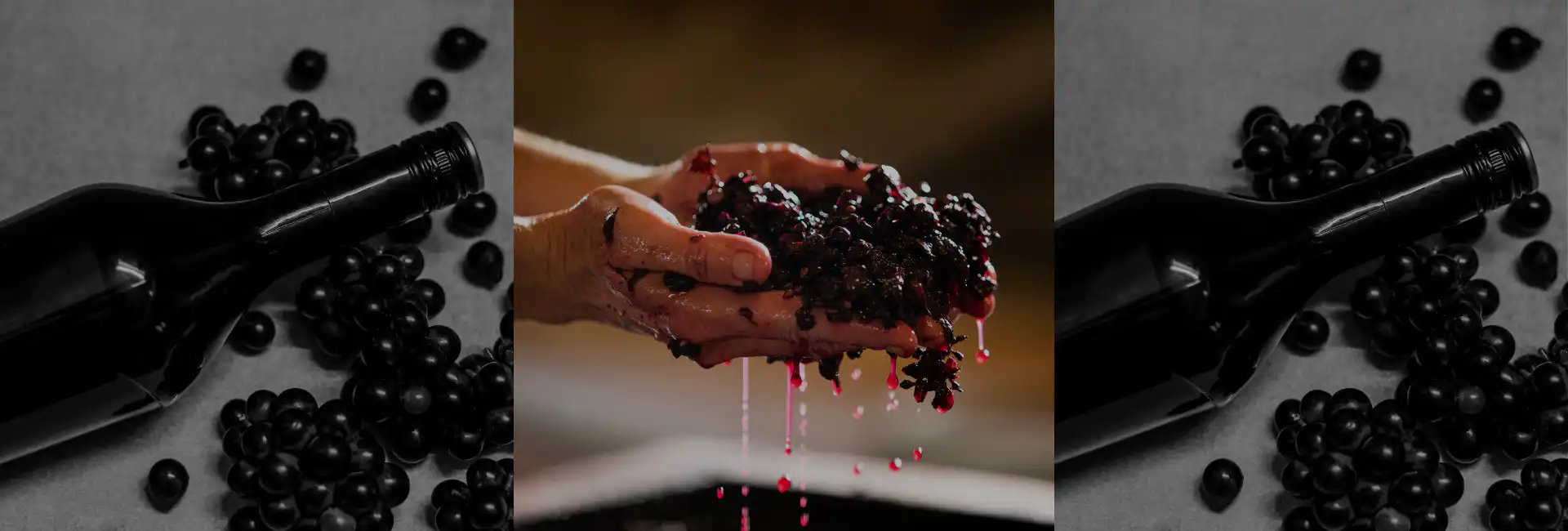

Bunches, Clusters & Stems: whole bunch fermentation in tasting notes
The point of these Wine Words articles is to cut through the techno babble and obscure terminology of wine speak. It therefore bugs the hell out of me that references to whole bunch fermentation – without any explanation or qualification – are becoming increasingly common in tasting notes. It bugs me even more that I’m as guilty of this as anyone.
This article is an attempt to unpack a technical winemaking term to explain what someone actually means when they say that a wine has the characteristics of whole bunches, clusters or stems.
What is whole bunch fermentation?
Whole bunch fermentation is an old school winemaking technique where the woody parts of a bunch of grapes are put into the fermentation vat, as opposed to the grapes being fully destemmed. I find it easiest to imagine a winemaker simply chucking entire bunches into the vat, which is what ‘whole bunch’ sounds like. In practice, winemakers might cut out various parts of the bunch’s ‘skeleton’ even to the extent of using nail scissors to give them a manicure, leaving just a small woody stalk – the ‘pedicel’ that connects each individual grape to the bunch – on each berry in a technique pioneered by Domaine Leroy.
This is the reason that whole bunch, whole cluster and stem influence are used interchangeably in tasting notes; they’re simply referencing the impact of woody parts of a bunch of grapes on a finished wine.
When you see it in tasting notes, whole bunch fermentation almost always refers to red wines and is closely associated with Pinot Noir, Syrah and Grenache, although it is increasingly used with other varieties such as Cabernet Franc and Nebbiolo (popularised by Burlotto for his famous Barolo Monvigliero).
Classical producers known for a whole bunch style include Domaines de la Romanee Conti and Dujac, and Rhone Valley traditionalists such as Allemand, Verset, Henri Bonneau and Chateau Rayas. Today, as a new wave of young producers takes inspiration from old school techniques, whole clusters are being used by producers like Nicolas Faure in Burgundy and Gour de Chaule in Gigondas, as well as By Farr in Australia and even Chateau Les Carmes Haut Brion in Bordeaux.
What does it do to a wine? How do you smell and taste it?
The use of stems has a complex set of impacts on a finished wine. I’m going to try and avoid getting deep into wine chemistry and break down the whole bunch influence into its biggest effects on a wine’s appearance, aroma and flavour.
Red wines made with whole clusters tend to be paler in colour. I’m trying to avoid, or at least limit, chemistry here but bear with me:
Acidity fixes colour in wine. The woody parts of a bunch of grapes are sources of potassium, which increases pH as it it released from the stems during winemaking. A higher pH value translates to a lower concentration of acidity which, in turn, results in a wine with a paler red colour.
Both Chateau Rayas and Dujac are renowned for wines paler in colour than those of their peers. The same can be seen in the new cult wines of growers like Bizot or Nathalie Vigot, who both use whole clusters.
In terms of aroma, whole bunches bring elements beyond fruit but which do not come from oak barrels. It is therefore a technique for bringing extra aromatic complexity to a wine.
Do stems smell of stems?
To my mind, aromas that are ‘stemmy’ in nature are quite close to stalkiness and, at that point, we are getting into the territory of under-ripeness and greenness, which is undesirable. Stems need to be fully ripe to be used otherwise green characters can leach into the wine an overwhelm the fruit. Similarly, the quantity of stems employed needs to be sensitive to the quality and ripeness of the fruit – the grapes –to achieve balance in the finished wine.
The positive aromas derived from whole clusters are both floral and spicy. I associate dried petals, rosehips and black pepper characters with wines made using stems and these are the aromas I am referencing when I write that a wine has the perfume of whole clusters.
On the palate, the flavours of a whole cluster wine follow the pattern established by the aromas, but the bigger impact is actually in structure and texture.
Why whole bunch builds tannin and structure. More chemistry, sorry:
Wines derive tannin from a group of compounds called polyphenols, found in their greatest concentration in the solid parts of grapes: the skins and seeds. The woody stems of a grape are a further source of polyphenols, so it follows that fermenting a wine with whole clusters builds both tannin and structure.
Linking back to a point above, you need ripe stems to build ripe tannin into your wine and you do not want to be adding green tannins from under-ripe stems. Green tannins are going to undermine balance and leave something aggressively dry and stalky.
Ripe tannins, derived from whole bunches, bring crunch, freshness and even a sense of lift. I find these wines sappy, toothsome and really like the French word croquant to communicate the almost audible snap of the texture. The additional structure can also bolster potential longevity as witnessed by the enduring freshness and capacity age shown by the likes of Domaine Leroy and Auguste Clape.
We’ve broken it down, can we put it back together?
The combination of a floral and spice-scented perfume, with those additional layers of flavour complexity and the fresh, crunchy tannins of whole bunch can result in a wine of elevated elegance and sophistication. I tend to find a greater sense of lift in these wines and the delicacy of a paler colour also plays into the same idiom. It doesn’t have to be this way and, as with all things in wine, the balance can tip over into something where the fruit is obscured behind the stem-derived notes and the structure has become top heavy. However, when it is successfully managed, I am a huge fan of wines made using this technique and I hope this article has gone some way towards explaining what it is about them I like, what references to whole bunch notes mean in tasting notes, and what to look for in the glass.